The Signal:
- Speculative cold storage is a scarcity bet on delivered, hard-to-build product.
- Trade-policy uncertainty is thinning the competing pipeline, a supply advantage.
- Cold chain underwrites on food, pharma, and reshoring demand, not e-commerce alone.
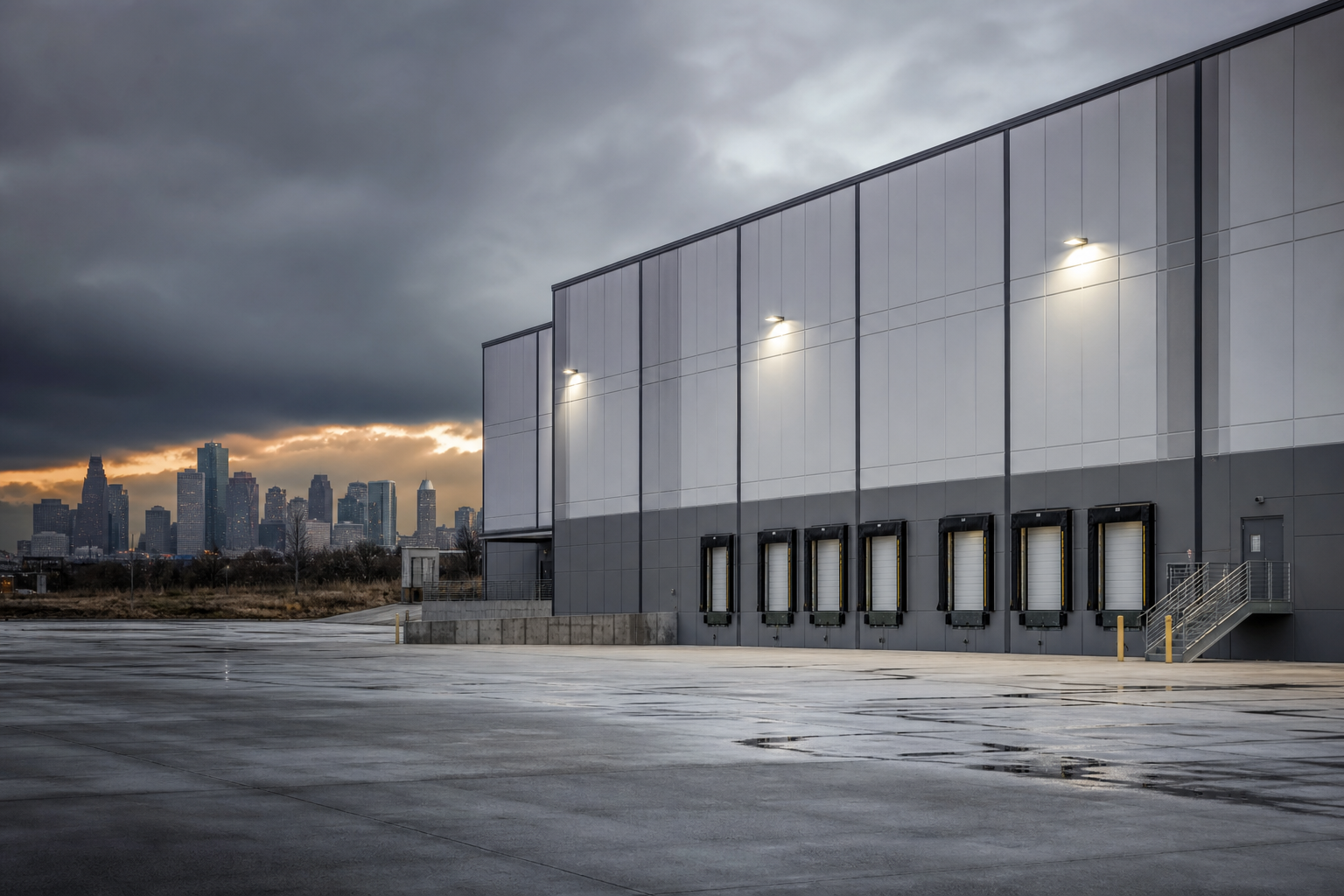
Cold storage is among the hardest industrial product to build: power-intensive, capital-heavy, and slow to permit. Boomerang starting a 325,000-SF spec box signals confidence that delivered, temperature-controlled space will be scarce when it opens in late 2027. The differentiated move is timing. While USMCA-renewal and tariff questions push some developers to pause, a firm that builds through the uncertainty meets demand with less competition.
The demand base is structural: frozen-food e-commerce, pharmaceutical cold chain, and reshored temperature-sensitive manufacturing, growing at a mid-teens CAGR off a 321B dollar base.
Implications: For industrial developers, the moat is execution capacity through a policy-uncertain window. For occupiers, delivered cold storage stays a landlord's market into 2028. For investors, cold chain is a specialized, high-barrier income stream that underwrites differently from dry warehouse.
Related coverage
Key Takeaways
- Building spec cold storage while rivals freeze on trade policy is how you own a scarce box the day it opens.
- Spec cold storage is a scarcity bet on delivered, hard-to-build product
- Trade-policy uncertainty is thinning the competing pipeline
- Cold chain underwrites differently from dry warehouse, on food, pharma, and reshoring
PR Newswire — Boomerang Industrial Breaks Ground on 325,274 Square Foot Cold Storage Warehouse in Schertz, Texas, July 2026 · Global Cold Chain Alliance (COLD FACTS) — 2026 Cold Chain Outlook, 2026 · Colliers Knowledge Leader — The Future of Speculative Cold Storage Development, 2026
Never miss a Signal
Get the daily brief that busy CRE professionals rely on.