📢 CRE 360 Signal™.
A clear shift is emerging in commercial real estate capital flows: risk is surfacing in previously favored sectors like data centers, while investors and lenders increasingly target more stable, income-driven asset classes such as healthcare real estate and self-storage. The pattern is less about broad market weakness and more about capital repricing and selective confidence.
🎧 Busy to read? Catch the Daily Podcast (Subscribe on YouTube, Apple, Spotify)➤ SIGNALS
1) Data Centers: Cracks in a “Defensive” Narrative
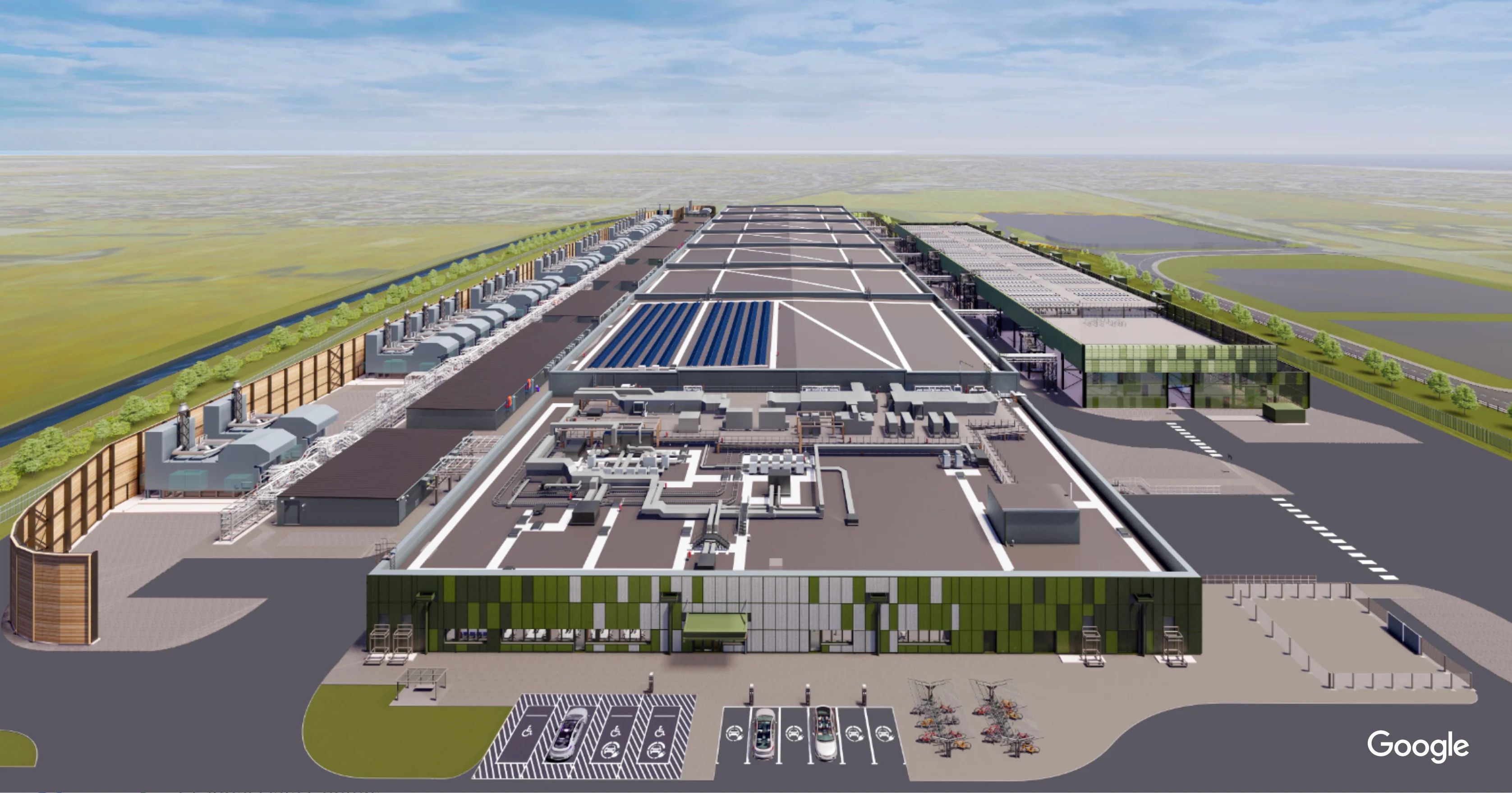
Data centers have been widely treated as a resilient, infrastructure-like asset class, driven by cloud demand and AI-related growth. However, recent credit developments are challenging that assumption.
Fitch Ratings has flagged pressure in a European data-center securitization tied to EdgeConneX, downgrading or placing certain notes on negative outlook. The primary drivers are higher interest rates and weaker cash-flow coverage, not demand collapse.
That distinction matters. The assets themselves may still be fundamentally strong, but the capital structure supporting them is under strain. This is a classic late-cycle signal:
Debt costs rise faster than NOI growth
Highly leveraged specialty assets lose margin for error
Credit markets, not operations, become the stress point
Assuming data centers are immune to rate cycles is flawed. They are still real estate with capital stacks, and when debt reprices, valuations follow.
Healthcare Real Estate: Capital Targets Stability
4
While specialty sectors face credit pressure, healthcare real estate is attracting steady institutional demand.
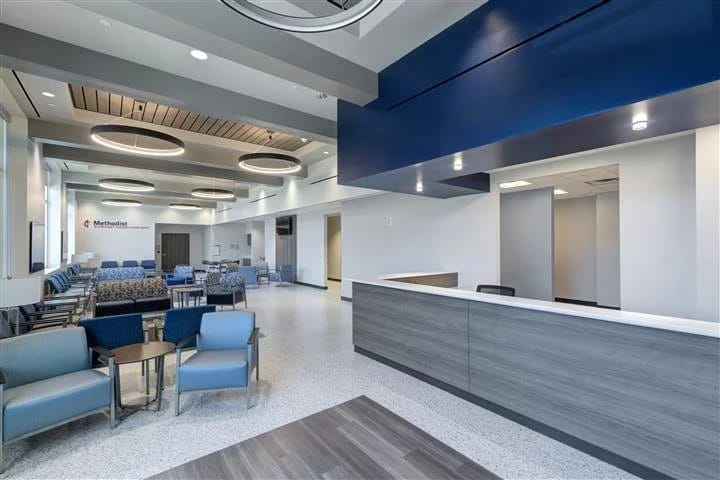
A recent transaction in Houston illustrates the trend: Berkadia arranged the sale and financing of Greenhouse Medical Plaza, a Class-A outpatient facility anchored by medical services such as imaging, surgery, and orthopedics.
The investment logic is straightforward:
Demand is service-driven, not discretionary
Tenant stability is higher than traditional office
Revenue is less sensitive to economic cycles
Capital is effectively pricing in durability over upside. That’s a defensive posture. This isn’t a growth play—it’s a yield preservation strategy. Returns will compress as more capital crowds the space, and execution risk shifts toward tenant credit and reimbursement exposure rather than leasing velocity.
3) Self-Storage: Credit Expands Into Defensive Yield
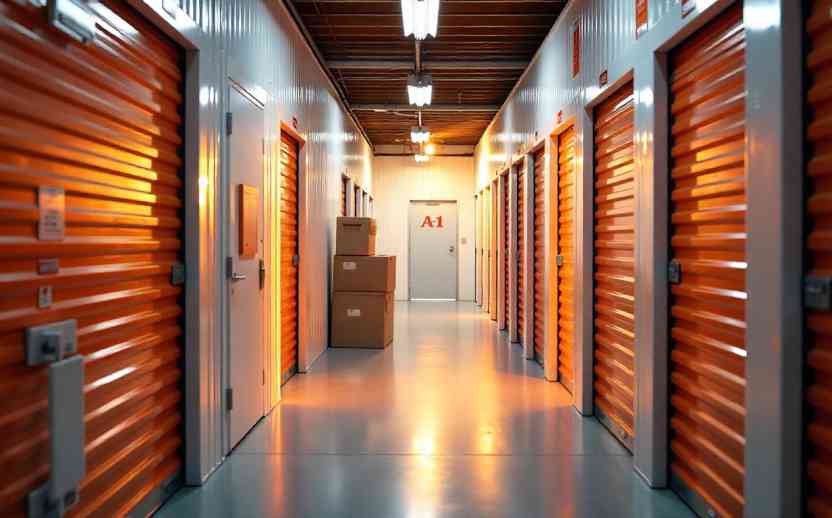
Self-storage continues to pull in capital through both equity and credit structures. SmartStop Self Storage REIT has partnered with AXCS Capital to launch a $100 million credit vehicle focused on bridge lending and preferred equity for storage assets. The rationale is consistent with broader capital rotation:
Short lease durations allow rapid repricing
Demand is tied to life events rather than macro cycles
Operating margins remain relatively strong
Unlike data centers, where stress is emerging from capital structure fragility, storage is benefiting from flexible income dynamics and simpler operating models.
Oversupply in certain submarkets remains a real threat. This sector looks stable at a national level but can break quickly at a local level if development pipelines aren’t controlled.
Key Takeaway
This is not a bearish signal for commercial real estate overall. It’s a late-cycle adjustment where capital becomes more selective, underwriting becomes tighter, and sectors with operational resilience outperform those dependent on aggressive leverage.
The market is shifting from “growth narratives” to “cash-flow certainty.” That’s a meaningful change. And if rates stay elevated, this rotation likely accelerates rather than reverses.
CRE 360 Signal™ — Commercial Real Estate Intelligence
▼ EDITORIAL DESK TOP PICKS
A Post-Crisis Rule Is Gone—And Distressed CRE May Move Faster Because of It. FDIC removes 2009 acquisition limits, accelerating how failed-bank assets transfer to private capital.
Savills Acquires Eastdil Secured for $1.11B. Global brokerage consolidates capital-markets power with major U.S. advisory acquisition.
JLL markets $350M loan on 225 Bush St. Distressed San Francisco office loan tests buyer appetite for legacy office assets.
Private Credit Faces Liquidity Test as Blue Owl Moves Loans. Asset sales highlight valuation pressure and liquidity management inside private-credit portfolios.
$875B commercial maturities face 2026 refinancing test. Maturing CRE debt collides with higher rates, exposing refinancing gaps and forcing asset-level repricing.
Inflation Slows in CPI but Sticky PCE Keeps Rates Elevated. Cooling rents reduce CPI pressure, but core PCE delays financing relief.
Gen Z Is Bringing Foot Traffic Back to U.S. Malls. Younger shoppers prefer in-store experiences, giving select malls renewed traffic and leasing momentum.
Underallocated Investors Begin Reconsidering Commercial Real Estate After Capital Markets Reset. Institutions remain below target allocations as CRE values stay well below 2022 peak.
Construction Backlog Stabilizes but Work Concentrated in Large Data Center Builders. AI infrastructure drives backlog growth while smaller contractors face weaker pipelines.
Blackstone’s $2.3B Alexander & Baldwin deal drives end-of-quarter CMBS activity. A $2.3B deal is cited as a catalyst for quarter-end CMBS volume and related securitization pipeline activity.
Aligned Data Centers closes on $2.58B credit facility. Aligned Data Centers closed a $2.58B revolving credit facility to fund U.S. data-center expansion tied to AI infrastructure demand.
Kemper secures $238M refi for Seattle-area tower. Kemper Development Co. refinanced a fully leased 561k-sf office tower in Bellevue with $238M, replacing a prior $220M loan.
Broad Street Development completes recap, inks $175M loan for 80 Broad Street. Broad Street Development completed a recapitalization and secured $175M financing for 80 Broad Street, advancing an office-to-residential conversion capital stack.
KBRA downgrades four ratings, affirms six ratings and withdraws four ratings for CGCMT 2016-P3. Kroll Bond Rating Agency cites loans-of-concern, interest shortfalls, and foreclosure/maturity stress across office/hotel collateral driving multi-class rating actions.
Fitch places Rialto’s commercial special servicer rating on Rating Watch Negative. Fitch Ratings put a CMBS special servicer rating on watch-negative, a governance/counterparty signal for resolution and advancing risk.
Trump administration reignites effort to sell federal properties
The Washington Post reports GSA sold a 940,000-sf former DHS building in Washington for $24M, aiming to avoid ~$200M in deferred maintenance.ICE is snapping up warehouses, reviving the market and alarming towns. ICE is purchasing warehouse real estate for detention-related uses, tightening some industrial submarkets and triggering local political pushback.
Capital Group buying downtown’s distressed Bank of America Plaza. Capital Group is reported as buyer of Bank of America Plaza at reset basis, a read-through on bid support for large offices.
EQT Real Estate sells 7.3 MSF logistics portfolio across 12 markets. EQT Real Estate sold a 36-property, 7.3M-sf logistics portfolio to Ares Management for about $650M.
NYC’s top commercial real estate loans in February 2026. February’s largest NYC CRE financings skewed to trophy-office refis, including multiple $800M deals and a $525M facility, reinforcing credit flight-to-quality.
Lawmakers push a bill to impose an AI data center moratorium. Los Angeles Times reports proposed federal restrictions that could slow new data-center starts, altering entitlement timelines and power-procurement risk for digital-infrastructure CRE.
Aligned Data Centers closes $2.6B credit facility for U.S. expansion. D Magazine frames the ~$2.6B facility as fuel for accelerated U.S. data-center buildout and balance-sheet capacity behind AI-driven demand growth.
Return to Lender: Week of March 26, 2026. This distress compilation flags CMBS liquidations with severe loss severities plus office/hotel foreclosures and new special-servicing transfers across multiple markets.
Morningstar DBRS confirms credit ratings on all six classes (CMBS surveillance update). Morningstar DBRS confirmed ratings across six classes in a CMBS surveillance action, a routine checkpoint amid elevated refinance/servicing strain.
Fed H.8 update: construction & land development loan balances (all commercial banks). Federal Reserve Bank of St. Louis refreshed weekly CRE loan series data, useful for tracking banking-system exposure to construction/land-development credit.

Related coverage
Get Capital Rotation Signals a Flight to Resilience Across CRE Sectors in your inbox
Capital is rotating toward resilient CRE sectors as rising rates pressure leveraged assets, exposing credit weaknesses in data centers and favoring stable income properties.