
Listen to 3 Minutes Podcast Instead.

📢Good morning — today’s Signals are brought to you by CRE360 Signal™.
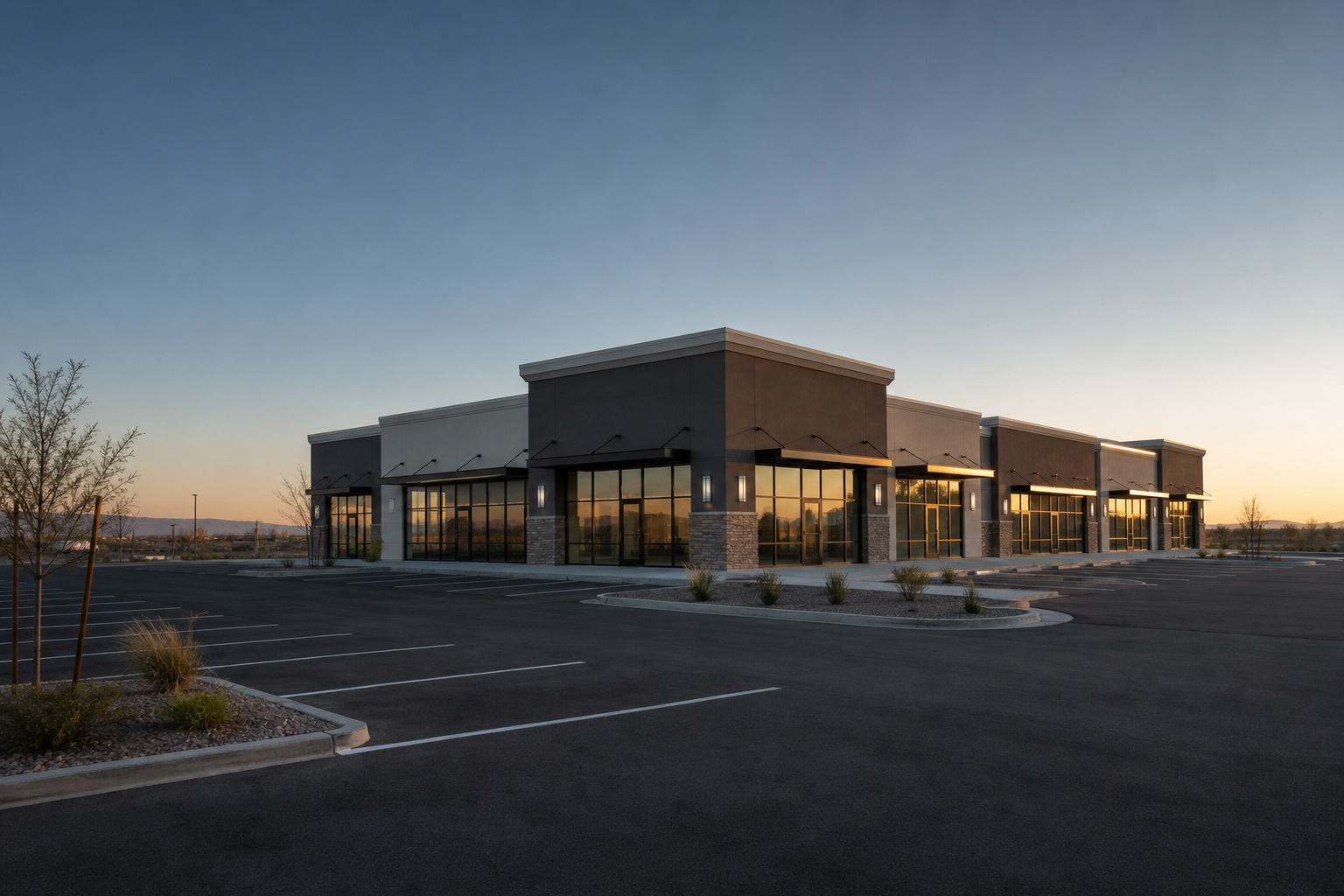
National retail vacancy is now projected to climb only modestly, peaking just below 4.4% by late 2026 (CoStar). This minor rise comes as quarterly net absorption is forecast at just 3.8M sq. ft.—a 61% drop from the 2015–19 average. Scarce new construction, coupled with steady demand for necessity-based retail, is tempering distress risk and anchoring asset values.
📊 Quick Dive
Net absorption forecast for 2026 is 3.8M sq. ft./quarter, down from 9.8M in 2015–19 (CoStar).
Retail construction starts at multi-decade lows; new supply remains at a standstill (CoStar).
Retail CMBS spreads have stabilized; Green Street’s all-property index up 3.1% YoY. Read Full Signal

Sunbelt Grocery Portfolio Signals Institutional Confidence
A $395M acquisition by Bain Capital Real Estate and 11North Partners of ten open-air retail centers in Florida and South Carolina underscores the sector’s tilt toward necessity-based retail. Seven of the properties are Publix-anchored, with portfolio-wide occupancy above 93% and average grocery sales at $1,000/sf. The deal closed at approximately $395/sf, and $260M in acquisition debt was secured—evidence of lender comfort with essential retail, despite the 10-year UST yield standing at 4.3% (CoStar, U.S. Census). Cap rates for comparable assets remain in the high-6% to low-7% range, as institutional buyers seek stability and scale in high-growth Sunbelt metros. Operator focus now shifts to incremental NOI growth through lease-up and pad site expansion.. Read Full Signal
Luxury Hotels Outperform as Marriott Raises Guidance
Marriott’s Q3 2025 earnings reveal a clear split in hospitality. Adjusted Q3 EPS hit $2.47—outpacing consensus by 3.3%—and the company raised its full-year profit forecast to $9.98–$10.06. U.S. and Canadian luxury hotel segments posted a 3.5% YoY room revenue gain, while government-related room revenue fell 14%, pressuring budget and select-service brands (Marriott, RCA). Investors and lenders are rotating toward luxury assets, compressing cap rates for prime hotels by 10–20 bps in 2025. Operationally, luxury hotels are focusing on rate growth and service, while lower-tier assets face cost discipline and slower demand recovery. Read Full Signal

Operators and investors should remain acutely disciplined as the current cycle rewards necessity-driven, high-credit assets over opportunistic risk-taking. With retail supply pipelines frozen and Sunbelt migration fueling grocery-anchored demand, portfolio construction should favor defensive tenant mixes and operational excellence. Hospitality stakeholders must segment their strategies—luxury and upper-upscale assets should leverage pricing power and international demand, while select-service portfolios need rigorous cost management and multi-channel marketing to sustain occupancy.
Capital is signaling a strong preference for stability, market scale, and predictable cash flows. Underwriting should assume muted rent growth and prioritize assets with proven tenant resilience or brand strength. The next 6–12 months will test expense controls and the ability to deliver incremental NOI from existing assets, not speculative new supply.

Monitor upcoming Fed signals for potential rate cuts in late 2025 or early 2026—any shift could trigger cap rate compression and deal reactivation.
Watch Sunbelt migration and income data; persistent population inflows will continue to underpin retail and hospitality demand.
Track retail absorption and vacancy rates—any deviation from the low-4% path may indicate shifting consumer sentiment or macro shocks.
Observe hospitality segment RevPAR and margin trends; luxury’s outperformance could attract further capital rotation.
Stay alert to operating expense pressures—labor, utilities, tariffs—and adjust underwriting and budgeting accordingly.

Get Capital is redrawing the real estate map, and scale—not sector—is now the decisive advantage. in your inbox
Institutional capital pivots to global digital infrastructure as BlackRock and ACS’s $27B joint venture signals unprecedented scale and sector dominance.