📢 CRE 360 Signal™.
A single, not-yet-energized campus in South Texas just signed contracted revenue larger than the market cap of many public REITs. This is where capital is actually flowing — and why the asset class now underwrites like infrastructure credit, not real estate.
🎧 Catch the Wekkly Podcast (Subscribe on YouTube, Apple, Spotify)➤ SIGNALS
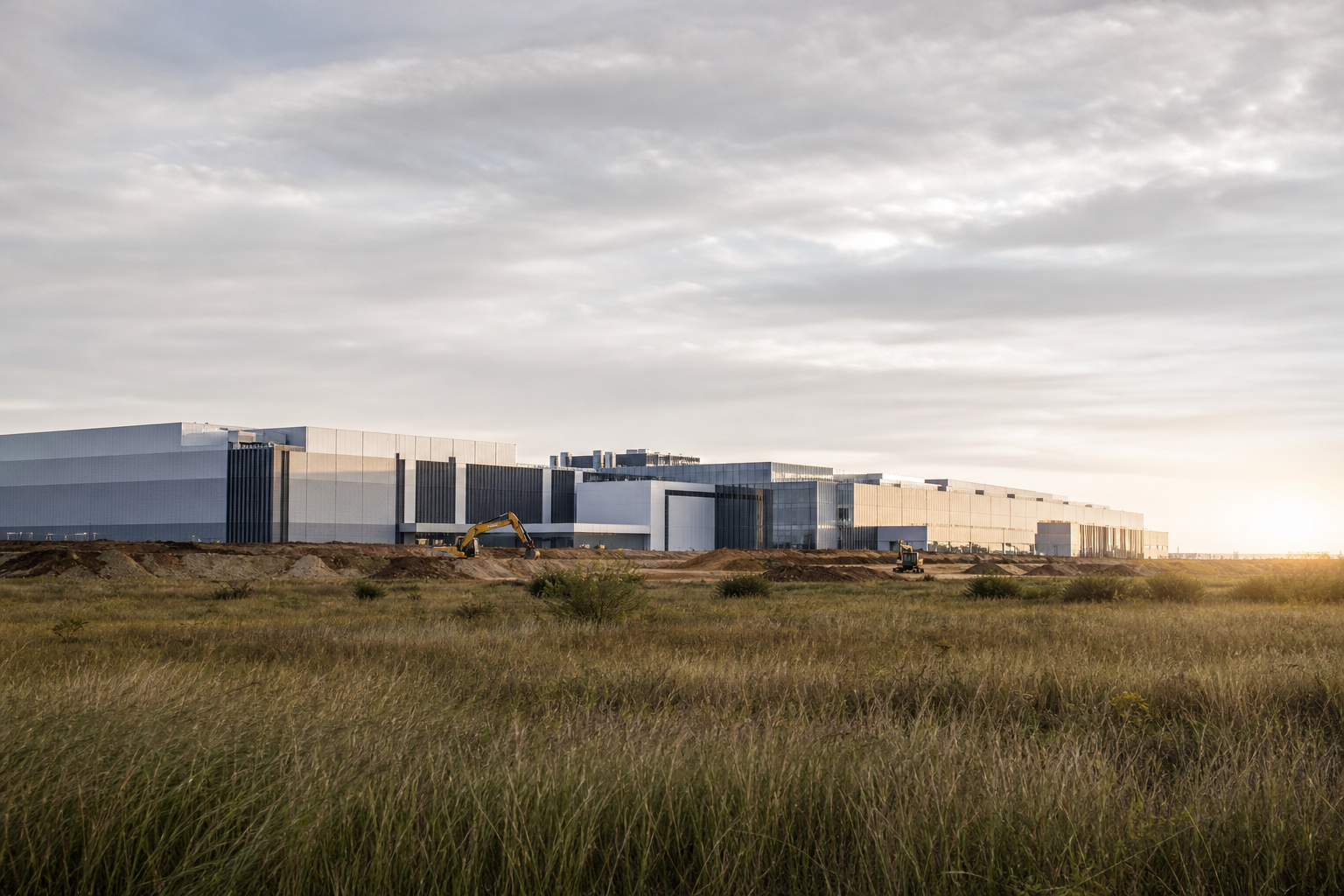
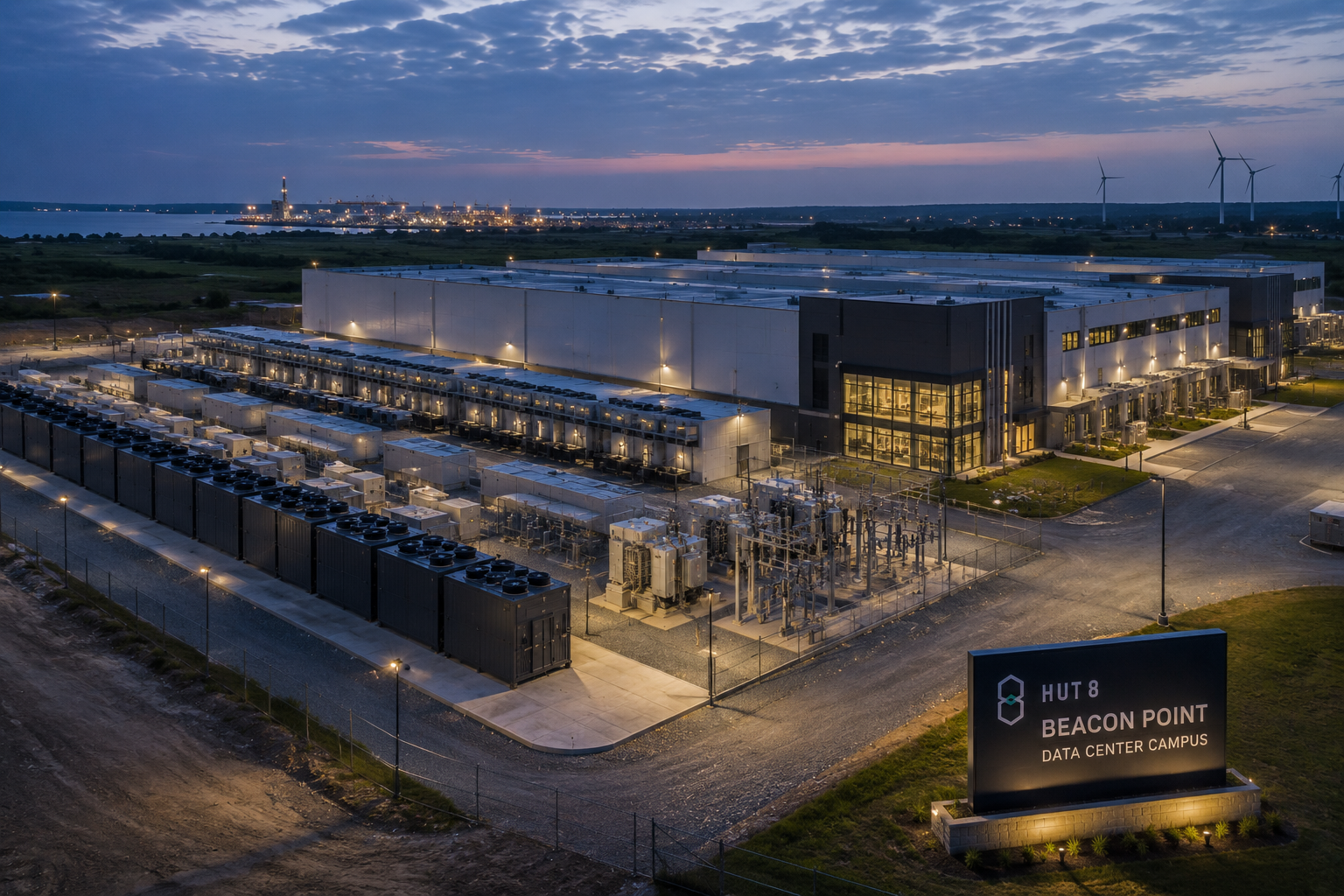
Hut 8 commercialized the first phase of its 1-gigawatt Beacon Point campus near Corpus Christi with a 15-year, 352 MW lease carrying $9.8B in base-term value — on a triple-net, take-or-pay basis with a high-investment-grade tenant. With renewal options, the total could reach roughly $25.1B. The asset won't energize until Q1 2027.
Zoom out and the structure repeats across the sector. Applied Digital signed a U.S. investment-grade hyperscaler to roughly $5B over ~15 years for 200 MW at its North Dakota campus, with a right of first refusal on another 800 MW. Across North America, primary markets posted record net absorption near 2,500 MW in 2025, and the top five hyperscalers have telegraphed roughly $710B of 2026 capex — enough to stand up about 35 GW of capacity globally.
The constraint has moved upstream. Power is now the primary site-selection factor, with grid-connection waits in primary markets exceeding four years. Hut 8's edge wasn't land or capital — it was a signed 1 GW interconnection agreement. Scarcity has migrated from buildings to megawatts.
Implications
Read the lease structure, not the square footage. A take-or-pay, triple-net lease converts a development project into a bond-like obligation: the tenant pays whether or not it uses the capacity, and the landlord sheds operating and vacancy risk. That's why lenders increasingly underwrite these deals on the tenant's credit and the interconnection queue — the same lens you'd apply to infrastructure debt, not to a comp set of rents.
That reframing changes the diligence. The questions that matter are the counterparty's balance sheet, the enforceability of the take-or-pay, and the certainty of power delivery on schedule. Construction risk is real — energization is still a year out — but it's increasingly a financeable, insurable risk rather than a speculative one.
The flip side is concentration. When one tenant's 15-year obligation is the entire investment thesis, single-counterparty risk is the whole game. And the four-year power queue cuts both ways: it's a moat for those who already hold interconnection rights, and a wall for everyone trying to enter. Frontier markets with available power — not established data-center hubs — are where the next wave of basis gets set.
For CRE allocators, the takeaway is uncomfortable but clear: the highest-conviction, largest-dollar leases being signed in American real estate right now are not for office towers, malls, or even logistics — they're for compute. Underwrite the counterparty and the kilowatt, or sit it out.
Stakeholder lens
Developers: Your scarce asset is an interconnection agreement, not entitled land. Secure power first; the lease follows.
Lenders: These cash flows behave like infrastructure credit. Underwrite the tenant and the take-or-pay, stress the energization date.
Investors: The yield is real but single-threaded. One counterparty, one power contract — size the concentration risk honestly.
Key Takeaways
In the AI buildout, the lease is a credit instrument and power is the collateral — underwrite the counterparty and the kilowatt, or pass.
CRE 360 Signal™ — Commercial Real Estate Intelligence
▼ EDITORIAL DESK TOP PICKS
1. Commercial Real Estate Lending Activity Reaches Five-Year High. CBRE's Lending Momentum Index reached its strongest level since 2021, signaling increased lending activity across CRE sectors.
2. Commercial & Multifamily Borrowing Increased 52% in Q1 2026. MBA reported commercial and multifamily mortgage borrowing rose 52% year-over-year in the first quarter.
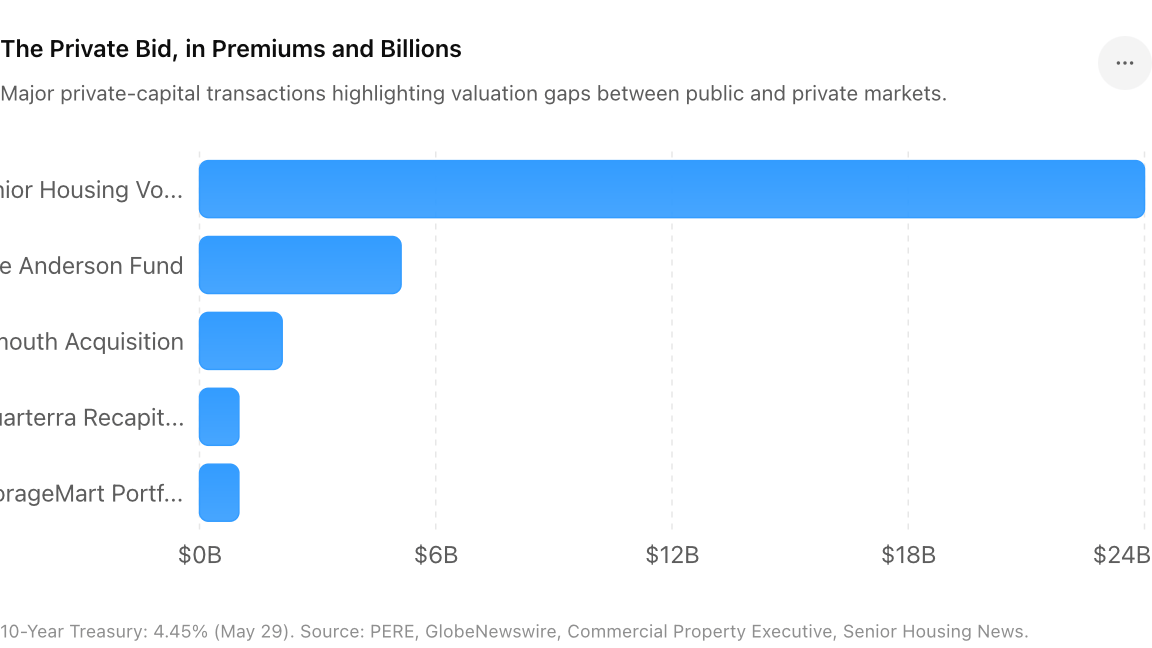
3. Kayne Anderson Closes $5.12 Billion Opportunistic Real Estate Fund. The firm announced the final close of an oversubscribed opportunistic equity fund with $5.12 billion in commitments.
4. CMBS Special Servicing Rate Reaches 11%. Trepp data shows the CMBS special servicing rate climbed to approximately 11% in May.
5. FDIC Reports Rising Nonperforming Commercial Real Estate Loans. The FDIC's Q1 banking report showed continued deterioration in nonfarm nonresidential CRE credit performance.
6. I Squared Acquires Data Center Portfolio From Cogent. I Squared Capital agreed to acquire U.S. data center assets from Cogent for approximately $225 million.
7. Edged Secures Nearly $2 Billion for U.S. Data Center Expansion. Edged announced approximately $2 billion in financing to support its U.S. data center development pipeline.
8. Prime Data Centers Breaks Ground on $3 Billion Phoenix Campus. Prime Data Centers started construction on three buildings within its $3 billion Metro Phoenix development.
9. PJM Accelerates Timeline for New Data Center Power Connections. PJM announced changes designed to speed up power delivery to large-scale data center projects.
10. AI Could Add 330 Million Square Feet of CRE Demand. Cushman & Wakefield projects AI-related growth could generate 330 million square feet of demand over the next decade.
11. JLL Arranges $300 Million Sale of FedEx Industrial Portfolio. A multi-state FedEx logistics portfolio traded for approximately $300 million.
12. Colliers Brokers $140 Million Industrial Facility Sale. A 1.6 million-square-foot industrial property in Tennessee sold for $140 million.
13. Newmark Arranges Sale and Financing of Logistics Portfolio. Newmark completed the sale and acquisition financing of a 1.38 million-square-foot shallow-bay logistics portfolio.
14. Industrial Asset in Northern Virginia Data Center Corridor Sells for $42 Million. Marcus & Millichap closed the sale of two industrial properties located within Northern Virginia's data center market.
15. ACRE Provides $351 Million Refinance for Multifamily Portfolio. ACRE supplied refinancing for a multifamily portfolio spanning four states.
16. HUD Expands Role in Multifamily Finance. HUD announced updates designed to increase its participation in multifamily lending programs.
17. Freddie Mac Issues Affordable Housing Forward Commitment. Freddie Mac provided a forward commitment supporting the development of new affordable housing in Arizona.
18. Avison Young Arranges $404 Million Permanent Loan in Manhattan. The firm secured financing for The Archive, a 479-unit multifamily property in Manhattan.
19. U.S. Office Vacancy Falls to 17.6%. Yardi Matrix reported national office vacancy declined modestly in April 2026.
20. Law Firms Continue Driving Premium Office Leasing. Savills reported legal-sector tenants remain among the most active users of high-end office space.

Related coverage
Key Takeaways
The tenant is unnamed. Without disclosed credit, the market is pricing an obligation it can't fully see — and the energization timeline (Q1 2027) leaves a year of execution risk before a dollar of contracted rent is earned.
Get The Lease That Out-Priced a REIT in your inbox
AI data centers are becoming the highest-conviction trade in commercial real estate — and power, not capital, is the wall.